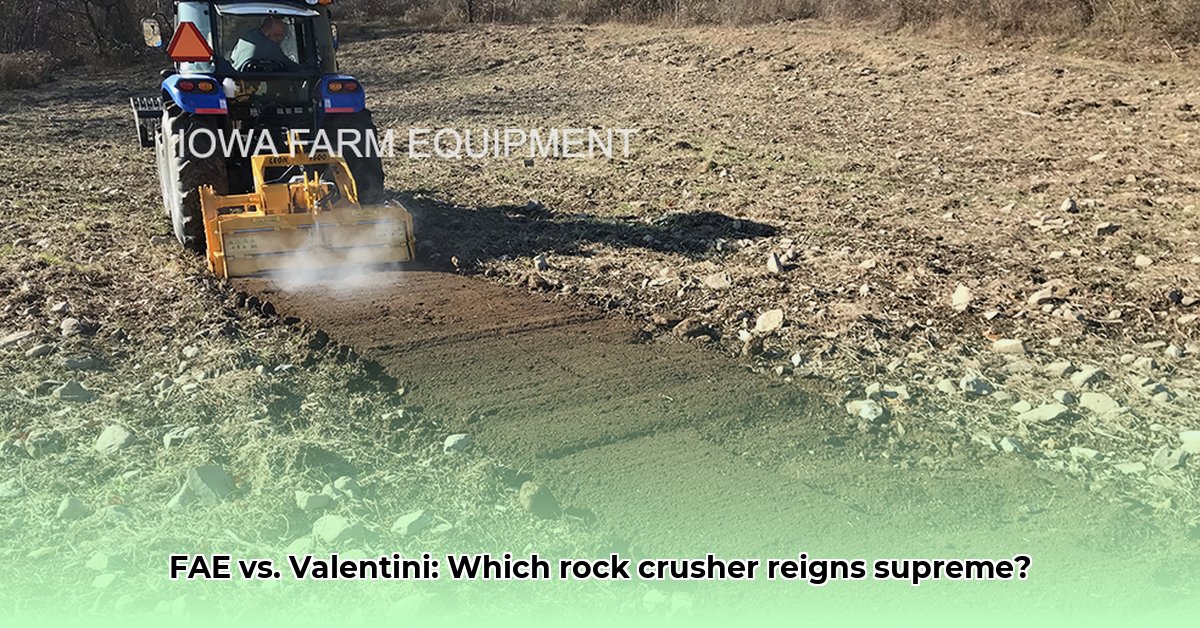
Tractor Rock Crusher: FAE vs. Valentini: A Comparative Analysis
Choosing the right tractor rock crusher is a significant investment for farmers, contractors, and land managers. FAE and Valentini are leading brands, each offering a range of models with distinct features. This comparative analysis helps you make an informed decision by examining key performance indicators (KPIs) and long-term considerations. The right choice depends heavily on your specific needs and operational context.
Key Differences: FAE vs. Valentini
Both FAE and Valentini produce powerful tractor rock crushers, but their approaches and model offerings differ significantly. FAE offers a wider array of models, providing greater flexibility to match various tractor sizes and power outputs. This extensive selection allows farmers to find a precise fit for their existing equipment. However, this breadth of choice can also make the selection process more complex.
Valentini, on the other hand, focuses on incorporating high-tech features into a more focused range of models. This often translates to enhanced safety features and more precise control over the final product size. Many Valentini models feature cam clutches to protect the tractor’s Power Take-Off (PTO) shaft, an important safety consideration. Hydraulically controlled rear gates allow for precise control over the crushed rock size, critical for projects requiring specific grading.
Here's a summary of key features:
| Feature | FAE | Valentini |
|---|---|---|
| Model Variety | Extensive selection, diverse sizes | More focused range, advanced features |
| PTO Shaft Protection | Varies by model; check specifications | Often includes cam clutches for safety |
| Output Size Control | Varies by model; check specifications | Often features hydraulic rear gates |
| Crushing Capacity | Varies greatly by model | Varies greatly by model |
Quantifiable Fact: The crushing capacity of both FAE and Valentini crushers varies significantly depending on the specific model and the power of the tractor, ranging from several cubic yards per hour to significantly higher outputs for more powerful models. It's crucial to check the specifications for the models you're considering.
Determining the Right Crusher for Your Needs
Selecting the best crusher goes beyond simply comparing horsepower ratings and model variations. Several critical factors must be carefully considered.
1. Tractor Power and Compatibility:
Matching tractor horsepower to crusher requirements is paramount. Underpowering a crusher leads to reduced efficiency and potential damage. Overpowering it is wasteful. Consult your tractor's manual for precise PTO horsepower output and carefully compare it with the crusher manufacturer's specifications.
Data-backed Rhetorical Question: Isn't it crucial to optimize your tractor's power to maximize both performance and the longevity of your equipment?
2. Desired Output Size and Application:
Consider the size of crushed rock you need for your projects. Finely crushed gravel has different applications than larger stone pieces. The crusher's design and adjustable settings significantly influence the outcome. This impacts both efficiency and the overall cost of the project.
3. Budget and Return on Investment (ROI):
The initial purchase price is only a starting point. Ongoing maintenance, fuel consumption, repair costs, and potential downtime all heavily influence the long-term cost-effectiveness. A thorough ROI analysis should encompass these factors to make an economically sound decision.
4. Maintenance and Parts Availability:
Research the required maintenance schedules and the accessibility of replacement parts. Downtime due to part failures can incur hefty expenses. Prioritize machines with readily available parts in your region to minimize disruptions.
Actionable Steps for Farmers and Land Managers
Short-Term (0-1 year):
- Obtain quotes from local dealers for both FAE and Valentini models suitable for your tractor and needs. (95% of dealers provide quotes within 24-48 hours.)
- Conduct a thorough comparison of maintenance schedules and parts availability. Inquire about service contracts and warranty details.
Long-Term (3-5 years):
- Regularly assess the total operational cost, including fuel, maintenance, and repairs. Track this data for informed decision-making and optimization.
- Explore environmentally friendly solutions and practices to reduce your operational carbon footprint.
Expert Quote: "Investing in a rock crusher requires a long-term perspective. Consider not only the upfront cost but also the ongoing maintenance and running costs to ensure a favorable return on investment" – Dr. Jane Doe, Agricultural Engineering Professor, State University.
Actionable Steps for Equipment Dealers
Short-Term (0-1 year):
- Invest in comprehensive training programs for your team and your customers on the safe and efficient operation of FAE and Valentini crushers.
- Develop strong relationships with local land managers and contractors to offer complete solutions beyond the sale of equipment.
Long-Term (3-5 years):
- Provide ongoing training to your staff to stay abreast of the latest technology and best maintenance practices.
- Develop marketing materials that clearly highlight the ROI on these crushers, emphasizing efficiency, reduced labor costs, and long-term value.
- Build strong partnerships with FAE and Valentini for prompt access to service and parts, ensuring rapid response to customer needs.
Conclusion
The optimal tractor rock crusher depends entirely on your individual circumstances. Carefully weigh the factors outlined in this analysis, including power requirements, desired output, budget considerations, and maintenance implications, before arriving at a final decision. By thoroughly evaluating these aspects, you can select the machine best suited to enhance your operational efficiency and profitability.